
Clare County Owner-of-Record Card
The Clare County BS&A parcel card packs owner, parcel, situs, mailing, value, and sale fields onto one screen, so save the page date and parcel number with it. That view shows which roll entry you read. No single refresh date covers every field.
| Owner name | The assessment roll's present owner-of-record display |
|---|---|
| Taxpayer | The person or entity tied to tax handling, which may differ |
| Mailing address | Where assessment and tax correspondence is sent |
| Situs address | The physical parcel location |
| Parcel number | The key linking BS&A, FetchGIS, and land records |
| Sale or deed reference | A recency clue that must be checked against the recording |
The owner field proves nothing about who lives there. A mailing address different from the situs just means the owner of record receives tax notices somewhere else. Do not swap the two. Preserve each field exactly as printed, and use the Clare County advanced property search when a parcel or owner query needs refining.
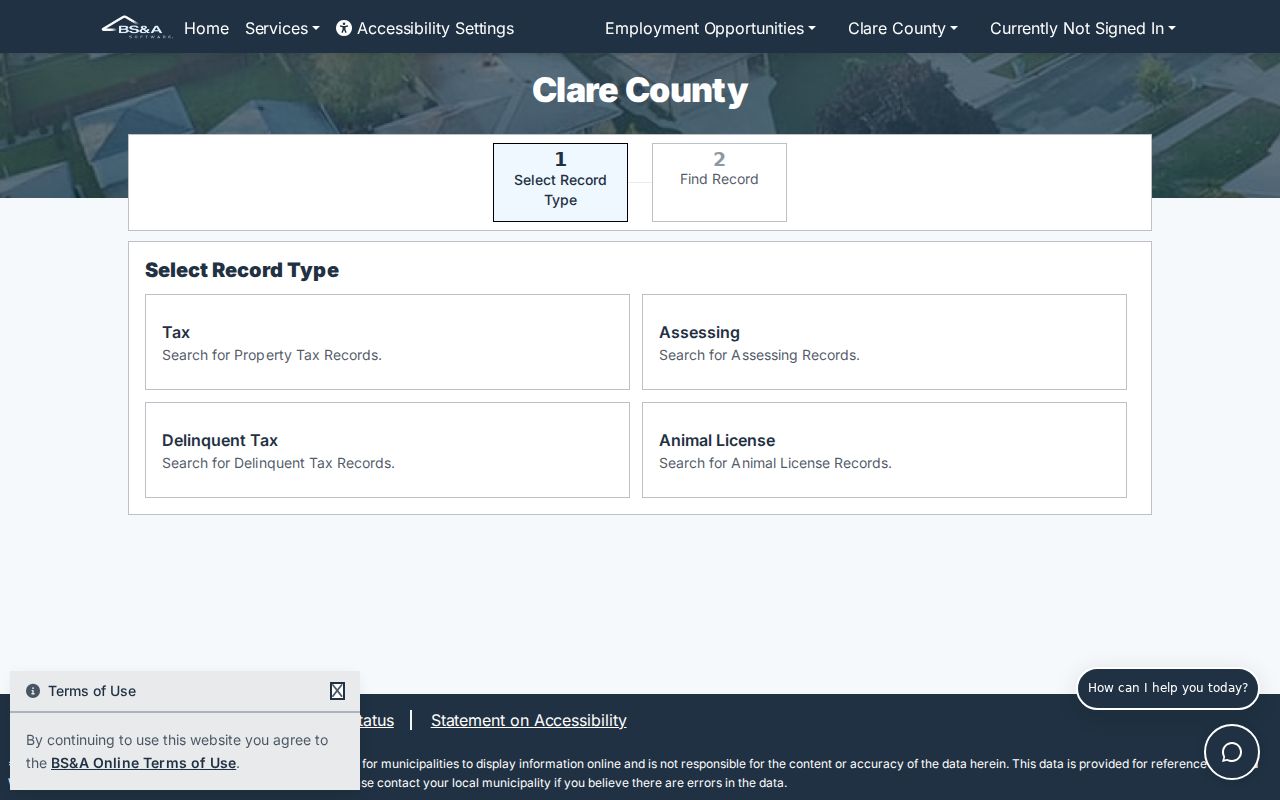
That screen is only a doorway. The Clare County search entry point shows where a parcel lookup begins, but a live parcel card and the newest recorded deed remain the real proof of the current owner.
Separate Clare Owner Addresses
Situs, mailing, and legal description answer different questions. Situs locates the land, and mailing shows where notices go. The legal description identifies the land conveyed. A postal city can cross a tax boundary, so a mailing label never substitutes for the local unit or complete PIN. Clare County makes this caution matter. The City of Clare reaches into Isabella County. Harrison mailing addresses can fall outside city limits, and Farwell is easy to confuse with nearby township geography. Check the county, local unit, parcel shape, school district, and complete PIN before assigning a current owner to any piece of land.
How Current Is Clare's Roll
Clare County promises no refresh schedule. No typical BS&A update interval is published either. Any exact lag between a closing and a roll update would be invented. A recent sale can therefore leave the prior owner on the online card while the new deed already sits in the Register of Deeds index. Save a dated screenshot or print of the owner, taxpayer, mailing, situs, PIN, and newest sale fields, then note the latest recorded deed date beside it. Those dates speak plainly. Together they show which Clare County source is fresher.
Recent sale check. When the Clare roll and newest deed conflict, verify the legal description and use the newest recorded instrument as the stronger recency clue.
Confirm Clare's Current Owner
Verification lives in the present tense. It never reconstructs the full chain of title. Use the owner display to spot the likely latest grantee, then check the one newest recorded instrument for the same land.
- Search BS&A by address or PIN and record the exact owner and taxpayer wording.
- Confirm the parcel in FetchGIS, especially when a city label or rural address may be ambiguous.
- Search the apparent new grantee and prior grantor through the Clare Register of Deeds route.
- Compare recording date, document reference, and legal description with the parcel card.
- Keep a dated note of both sources and ask the public vault when online coverage is incomplete.
- Owner of record
- The party shown by the current public roll or latest recorded instrument.
- Assessment roll
- The official list used to administer parcel values and taxes.
- Situs address
- The physical parcel address, separate from the tax mailing address.
- Recording lag
- The possible time gap between a deed filing and another system's update.
Clare Deed Recency Fallback
The Clare County Register of Deeds links Tapestry and Laredo for remote deed records searching. Both routes can be paid or account-gated. The official pages publish no earliest online year. A missing or unclear result points to the public vault at 225 W Main Street in Harrison, or a call to (989) 539-7131. Vault searching closes at 4:00 p.m. on weekdays. Bring the owner name, prior owner if known, full PIN, legal description, approximate recording date, and expected document type. Ask staff about the imaging cutoff and older books. A written Clare FOIA request can describe a non-indexed public record. The direct index is faster for a known deed.
Current Clare Entity Owners
Copy an LLC name exactly. Then check it against Michigan's MiBusiness Registry Portal, which launched in 2025 and offers searches, filings, certificates, and copies. The registered agent is a contact for the company. That agent is not proof of who owns the land or benefits from it. Trusts and estates raise the same caution. They may appear under a trustee, personal representative, fiduciary, or formal entity name. Search the exact roll name and the newest deed. If the deed cites probate authority, MiCOURT can provide a case lead while the local probate clerk holds the actual public file or order. Protected probate material may never display online.
Clare Tax Names May Lag
Tax tabs serve collection, not title. A Clare County tax account can retain an old owner, taxpayer, or mailing label long after a deed has changed hands. Foreclosure or auction status adds another date-sensitive layer. Never infer current ownership from a tax-sale listing or payment page. The Treasurer handles delinquency, hardship, foreclosure, and auction information. Verify a current notice at the county page and compare it with the land-record index. Auction lists create no owner of record.
Contact a Clare Property Owner
The public tax-mailing address is the restrained route for a lawful parcel matter. It can differ from the property address. It is not proof of where a person lives. Write only about the land issue, keep a copy, and never seek protected identifiers or a confidential physical address.
Lawful use. Public owner records do not permit stalking, threats, repeated unwanted contact, or attempts to defeat Michigan address-confidentiality protections.
Michigan's Address Confidentiality Program gives qualifying survivors a substitute address and mail forwarding, and government entities must use it. Protected locations stay protected. Never match records to expose one. Voter, court, and parcel data must never be combined to find where a participant lives, and a current owner lookup belongs to due diligence, boundary questions, and civic review only.
Keep a Clare Owner Snapshot
Dates make an owner answer trustworthy. When you pull the BS&A result, save the owner and taxpayer columns, the mailing and situs addresses, and the full PIN. Add the legal description and the sale reference. Do the same with the newest deed index entry. Keep its recording date and the book-page reference. Label every capture with the day you checked it.
Small differences matter. Initials, punctuation, married names, trust dates, and LLC suffixes can all shift index results. When a transfer looks recent, search the new grantee and the prior grantor too. Compare legal descriptions as well. Two Clare County owners can share a name, and one owner can hold several Clare County parcels.
Conflicting answers deserve a phone call. Reach the Register of Deeds at (989) 539-7131 and the relevant local assessor. Ask whether the deed has been indexed. Ask whether the tax roll reflects the transfer, and whether a corrected instrument or property-transfer affidavit is still pending. Your notes should state the conflict and its dates. Leave out any guess at a refresh cycle. For liens, title rights, or competing claims, order the recorded documents. Then consult a qualified Michigan title or legal professional.